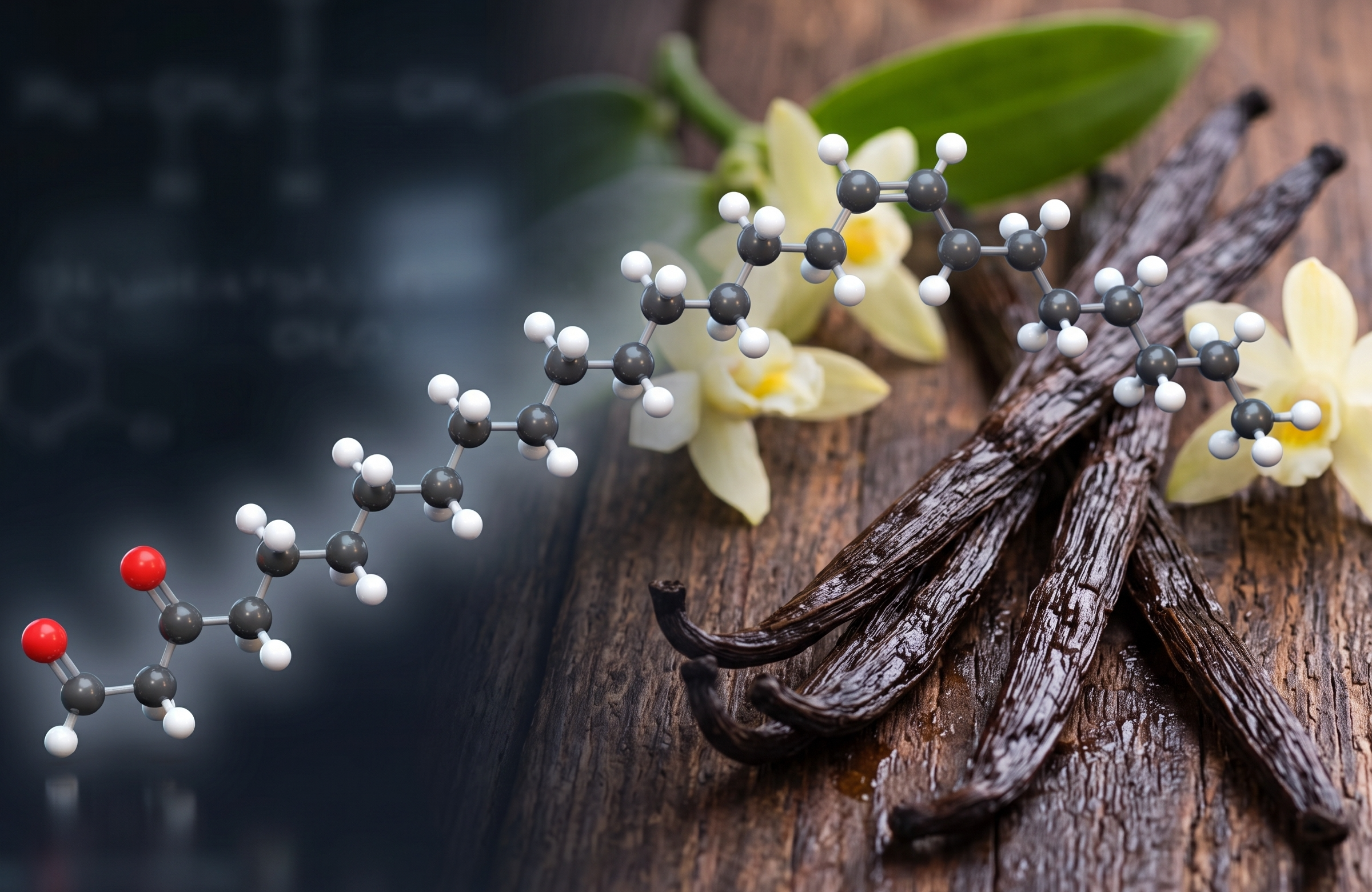
The lipid fraction of cured vanilla pods (Vanilla planifolia) accounts for approximately 10–15% of total dry weight, consisting predominantly of triglycerides, free fatty acids, and epicuticular waxes. While palmitic (C16:0), oleic (C18:1), and linoleic (C18:2) acids form the bulk of the internal acyl lipids, the outer cuticular wax contains specialized long-chain aliphatic derivatives.
Most notably, long-chain beta-Diketones serve as structural markers in Vanilla epicuticular wax. Among these, nervonoylacetone—chemically identified as (Z)-18-heptacosene-2,4-dione—represents a unique long-chain aliphatic beta-Diketone derived via condensation reactions involving nervonic acid (C24:1).
Nervonoylacetone analytical standard has just been released for quality control and research protocols calibration. Bulk quantity are also available from EXTRASYNTHESE for bioactivity and application studies.
Other specific vanilla wax lipids are also available on demand from Extrasynthese, like the long chain gamma-Pyrone with following structure :
During the enzymatic and oxidative curing processes (sweating and drying), these hydrophobic surface lipids modulate water retention, protect secondary metabolites, and undergo partial autoxidation. The degradation of long-chain unsaturated lipids yields volatile methyl ketones and aliphatic diones that contribute subtle balsamic and cream-like nuances to the complex natural vanilla aroma matrix.